Modern HR technology has reached impressive levels of specialization. Today's HR platforms excel at recruiting, learning management, payroll processing, and compliance tracking with capabilities that would have seemed impossible just a decade ago. Yet despite these powerful tools, HR teams continue to struggle with manual coordination, inconsistent processes, and time-consuming administrative tasks.
The challenge isn't that HR platforms lack functionality - it's that they're designed for generic workflows, not company-specific execution. The real work of HR happens in the spaces between these specialized systems: the handoffs, customizations, and coordinated processes that make the employee experience seamless and compliant.
The Specialization Success Story
Modern HR platforms have achieved remarkable specialization across key functional areas:
- Recruiting Platforms: Sophisticated candidate sourcing, screening, and pipeline management
- Learning Management Systems: Comprehensive training delivery, progress tracking, and certification management
- Payroll Solutions: Complex calculation engines, multi-country compliance, and detailed reporting
- Performance Management: Goal setting, review cycles, and 360-degree feedback systems
- Benefits Administration: Enrollment management, carrier integration, and compliance tracking
Each of these platforms has evolved to handle increasingly complex requirements within their domain. They offer deep functionality, industry-specific features, and sophisticated user interfaces that make specialized HR tasks more efficient and accurate.
The Execution Gap
However, organizational success requires more than functional excellence within individual HR domains. It demands seamless coordination across the entire employee lifecycle, from recruitment through retirement. This is where the gap becomes apparent.
Company-Specific Requirements
Every organization has unique requirements that generic platforms cannot address:
- Approval Hierarchies: Complex organizational structures that require custom routing and escalation logic
- Compliance Requirements: Industry-specific, regional, or contractual obligations that demand specialized workflows
- Integration Needs: Connections to legacy systems, custom applications, and third-party services
- Cultural Considerations: Company values and practices that must be reflected in HR processes
- Scale Variations: Different processes for different employee types, locations, or business units
The Reality Check: HR platforms are optimized for their functional domains, but they cannot anticipate or accommodate the infinite variations in how organizations actually operate. The customization and coordination required for company-specific execution must happen elsewhere.
Cross-System Coordination Challenges
The most critical HR processes require coordination across multiple specialized systems. Consider these common scenarios:
- Employee Onboarding: Requires coordination between recruiting systems, IT provisioning, training platforms, payroll setup, and compliance tracking
- Role Changes: Involves updating job classifications, adjusting compensation, modifying access rights, triggering training requirements, and updating organizational charts
- International Assignments: Requires complex coordination between payroll systems, benefits platforms, tax authorities, immigration tracking, and compliance monitoring
- Performance-Based Actions: Links performance management data to compensation adjustments, career development plans, training recommendations, and succession planning
These processes don't fail because individual platforms are inadequate - they fail because orchestration is missing. Without coordinated execution, organizations resort to manual handoffs, email-based coordination, and spreadsheet tracking that creates delays, errors, and inconsistent experiences.
The n8n Orchestration Solution
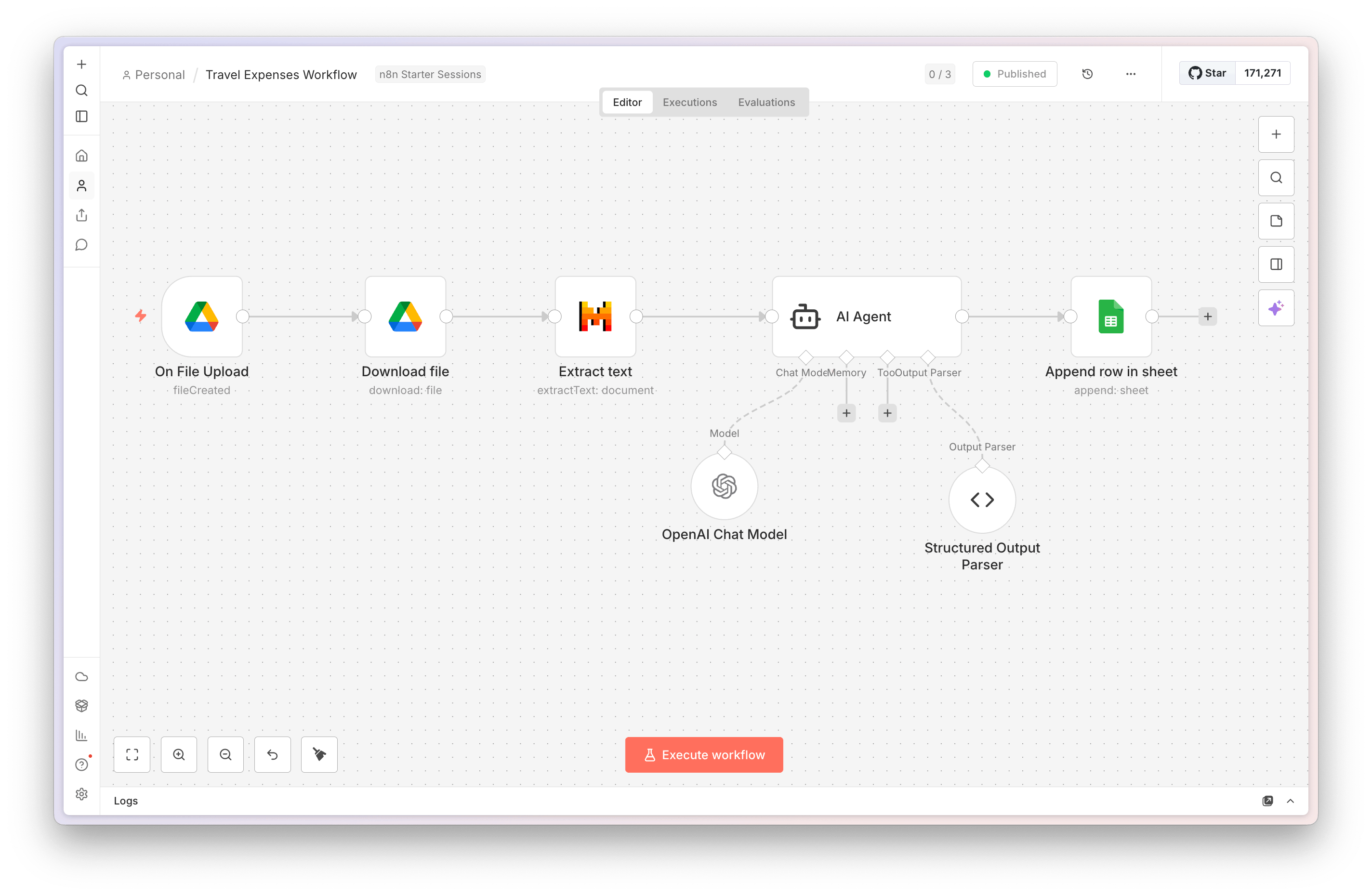
n8n transforms HR operations by serving as the execution layer that connects specialized HR platforms into coordinated, company-specific workflows. Instead of replacing existing HR systems, n8n orchestrates them to deliver seamless, automated processes that reflect actual organizational requirements.
Company-Specific HR Logic
n8n workflows can implement the unique business logic that differentiates your organization:
- Custom Approval Routing: Dynamic workflows that route requests based on organizational hierarchy, request type, amount thresholds, and business rules
- Conditional Process Flows: Different process paths for different employee types, locations, or circumstances
- Compliance Automation: Automatic triggering of compliance checks, documentation requirements, and regulatory reporting
- Exception Handling: Intelligent management of edge cases and non-standard scenarios
Seamless IT Provisioning Integration
One of the most complex aspects of HR processes is coordinating with IT systems. n8n workflows can automatically:
- Create user accounts across multiple systems based on role requirements
- Provision hardware and software based on department and seniority
- Configure access rights according to security policies and business needs
- Schedule equipment delivery and setup appointments
- Track provisioning status and escalate delays
Comprehensive Training Coordination
Learning and development becomes much more effective when integrated into broader HR processes:
- Role-Based Training Plans: Automatically assign required training based on position, department, and career level
- Compliance Training Tracking: Monitor completion status and trigger reminders or escalations
- Career Development Integration: Connect performance management data to personalized development recommendations
- Certification Management: Track expiration dates and automatically schedule renewal training
End-to-End Compliance Tracking
Compliance becomes manageable when it's built into automated processes rather than handled as separate activities:
- Automatic generation of required documentation and forms
- Real-time monitoring of compliance status across all employees
- Proactive alerts for upcoming deadlines or requirements
- Comprehensive audit trails for regulatory reporting
Platforms Stay, Gaps Get Closed: n8n doesn't replace your specialized HR platforms - it orchestrates them into cohesive, company-specific workflows that deliver the employee experience you want to provide.
Measurable Business Impact
Organizations implementing n8n-based HR orchestration consistently achieve significant improvements:
Strategic Advantages
Beyond operational efficiency, orchestrated HR processes deliver strategic benefits:
- Enhanced Employee Experience: Consistent, predictable processes that reduce friction and frustration
- Improved Compliance Posture: Automatic adherence to policies and regulations reduces risk
- Better Resource Allocation: HR teams shift from administration to strategic initiatives
- Scalable Operations: Processes that grow with the organization without proportional increases in administrative burden
- Data-Driven Insights: Comprehensive tracking provides visibility into process performance and bottlenecks
Implementation Best Practices
Successfully implementing HR orchestration requires attention to several critical areas:
Process Mapping and Documentation
Before automation, organizations must clearly understand their current processes:
- Document existing workflows, including exceptions and edge cases
- Identify decision points and approval requirements
- Map system interactions and data dependencies
- Define success metrics and performance targets
Change Management
HR teams and employees must be prepared for new ways of working:
- Clear communication about process changes and benefits
- Training on new workflows and system interactions
- Support resources for troubleshooting and questions
- Feedback mechanisms for continuous improvement
Security and Privacy Considerations
HR data requires special attention to security and privacy:
- Role-based access controls for sensitive information
- Encryption of data in transit and at rest
- Audit logging for all system interactions
- Compliance with data protection regulations (GDPR, CCPA, etc.)
The Evolution from Administration to Control
When HR processes are properly orchestrated, something transformative happens: HR teams evolve from administrative coordinators to strategic controllers. Instead of manually managing handoffs and chasing approvals, they focus on:
- Process Optimization: Analyzing workflow performance and identifying improvement opportunities
- Strategic Planning: Using comprehensive data to inform workforce planning and development strategies
- Employee Development: Focusing on high-value activities like coaching, career development, and culture building
- Innovation: Exploring new approaches to talent management and employee engagement
Key Insight: HR excellence is not driven by platform capabilities alone - it's achieved through orchestrated execution that connects specialized tools into seamless, company-specific processes.
Looking Forward
The future of HR operations lies in the intelligent orchestration of specialized platforms. Organizations that recognize this shift and invest in connecting their HR ecosystem will achieve:
- More consistent and predictable employee experiences
- Reduced administrative overhead and operational costs
- Better compliance and risk management
- Greater agility in responding to organizational changes
- Enhanced strategic contribution from HR teams
Conclusion
The specialization of HR platforms represents tremendous progress in addressing functional requirements. However, organizational success requires more than functional excellence - it demands coordinated execution that reflects company-specific needs and delivers seamless employee experiences.
By implementing orchestration solutions like n8n, organizations can bridge the gaps between specialized platforms, automate company-specific logic, and enable their HR teams to focus on strategic rather than administrative activities. The platforms stay, the gaps get closed, and HR operations finally deliver on their full potential.
When the real work between HR platforms is properly orchestrated, both employees and organizations benefit from more efficient, consistent, and strategic human resource management.